




How a Small Wooden Easel Can Transform Your Home Décor: UK Styling Tips
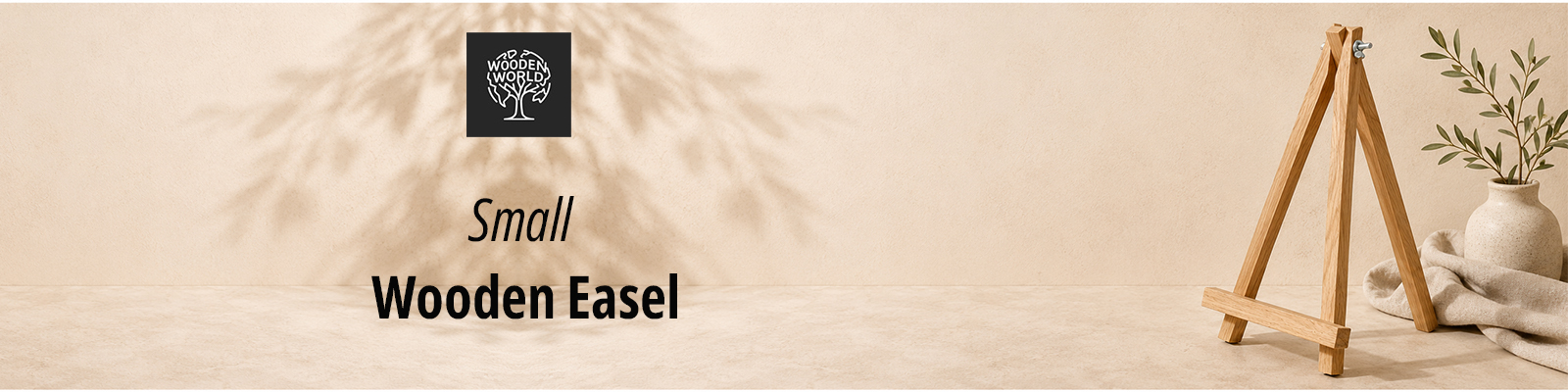
Every so often something cheap changes a room. This is one of those things.
Have a look around and count what's lying flat. Photos face-down on a shelf. A canvas leaning against the skirting since spring. A hand-painted plate shut away in a cupboard because nobody worked out where it should go. All horizontal, all more or less invisible.
Prop any of it upright and the whole feel changes. Clutter turns into display, and the shelf stops looking like somewhere things get put down. That's what a small wooden easel does for about the price of two coffees.
Below, the places people actually end up using them.
Height Does the Heavy Lifting
Designers call it layering. What they mean is giving the eye somewhere to travel.
Everything at one level reads as a straight line and nothing else. Lift one item and the rest arranges itself around it, without a single thing being moved.
Wood pulls this off quietly, which chrome and acrylic never manage. Warm tone, visible grain, no glare — it settles beside painted walls and oak boards rather than competing with them. A tabletop wooden easel more or less vanishes behind whatever sits on it, and that's the compliment.
Tilt matters as well. Angled slightly back, a print picks up lamplight in a way it never does lying flat. Colours look deeper for it.
Where to Try One First
The mantelpiece, nearly always. Quickest improvement going.
Stop lining frames up shoulder to shoulder. Raise one, gather the smaller ones round its base, and suddenly the whole thing looks arranged rather than accumulated.
Kitchen dressers and open shelving take to them well. Plates, tiles, small prints, a cookbook left open at whatever's being cooked that week.
Hall consoles too. Put a small wooden display easel UK homes use next to the door and it holds a photo, a seasonal print, a bit of art — no drill, no rawlplugs, nothing needing filled in later. Anyone renting will see the appeal instantly.
Bedsides, desks, windowsills, all fine. Bathrooms as well, so long as the room isn't permanently full of steam.
The No-Drill Problem
British houses fight back against picture hanging. Tenancy clauses ban it. Old plaster gives way at the wrong moment. Victorian brick hides horrors behind the wallpaper. Picture rails cover maybe a third of what you'd want.
Propping avoids the lot. Shift a piece to another room on a whim. Change the whole display at Christmas. Take something down before the in-laws arrive. No filler, no touching up paint, no awkward conversation about the deposit.
One rule, though: cluster them. Three at staggered heights on one surface looks deliberate. One in every room looks like leftovers.
Plenty of Them Never Hold Art
Half of what gets sold ends up doing something else entirely.
Cafés, delis and farm shops churn through them for price cards and specials. A wooden menu display stand UK venues rely on keeps a card upright exactly where people look, instead of flat on a counter buried under the card reader.
Same thinking at home. Recipe card while cooking. Tablet during a video call. Seating plan on the sideboard. Chalkboard sign by the back door for a barbecue.
Weddings get through hundreds. Table numbers, welcome boards, orders of service, photographs of people who couldn't be there. Light, portable, and thankfully nothing like office equipment.
Market traders swear by them, because anything raised outsells anything flat on a crowded table.
Plates and Collections
Decorative plates spend most of their existence in a cupboard, which makes owning them faintly ridiculous.
A wooden plate display stand UK collectors use gets them out again without drilling a hanger into the back of something breakable. Commemorative pieces, hand-painted work, inherited china, the plate somebody brought back from Crete — all better upright.
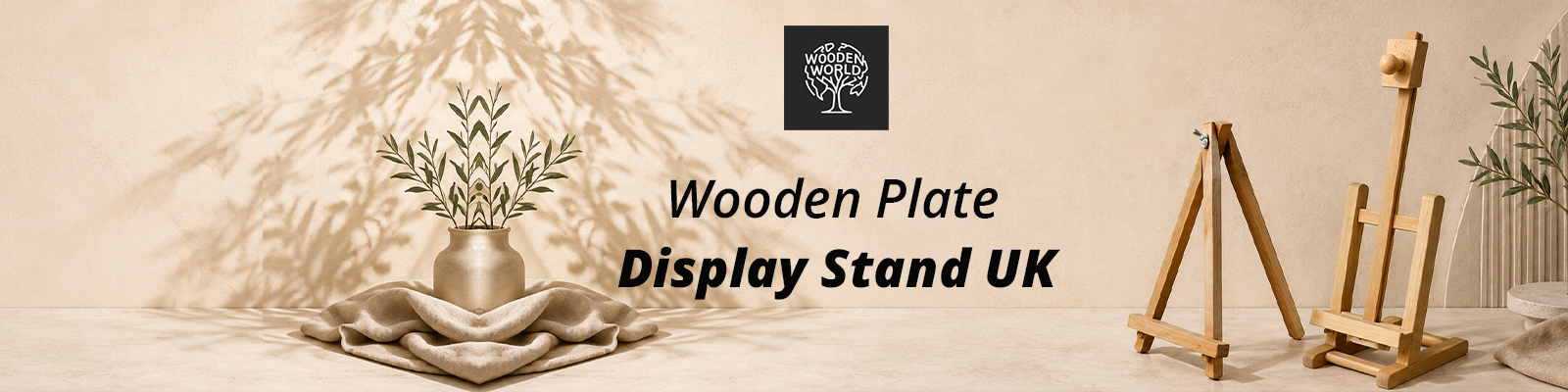
Two things to check before buying. Lip depth: the rim wants holding securely, though not so tightly that lifting it out risks a chip. And weight — heavy stoneware needs a broader base than thin porcelain, so buy per piece rather than one size across a whole collection.
Rotate what's on show every few months. Same shelf, four different moods across the year.
Spotting One That'll Last
Build quality varies enormously, and it shows itself fast.
Joints first. Any gap where the legs meet the frame means wobble, and wobble only gets worse with handling. Open the rear leg fully and watch whether it locks at a proper angle or creeps outward under load.
Timber second. Solid wood takes handling; thin composite splits at the pivot inside a few months. Pick it up — suspiciously light usually means soft and cheap.
Finish third, tested with fingers rather than eyes. Rough patches catch frame edges and snag anything soft.
Then size it to the job. A small wooden easel made for a postcard buckles under a heavy framed print, while an oversized one leaves a delicate plate looking stranded.
Trading out of Lowestoft with free UK delivery, Wooden World has thirteen years behind it and over 70,000 positive eBay feedbacks across kitchen, home, craft and gift ranges.
Looking After Them
Barely any work involved.
Dust with a dry cloth, or barely damp at most. Soaking swells the fibres, and swollen fibres loosen every joint eventually.
Keep them off radiators, out of direct sun, away from damp corners. Timber shrinks and warps with temperature swings, and a conservatory sill is the classic offender.
Raw wood takes paint, stain or decoupage without complaint, useful when a stand needs matching to a particular room. A wipe of food-safe oil or beeswax richens the grain and adds a bit of protection.
Fold the spares flat and drop them in a drawer. They take up nothing at all, and there's always another use for one.
Small Effort, Obvious Result
Redecorating costs a fortune and turns the house upside down. Moving what's already there costs nothing whatsoever.
Choose three things currently flat or hidden. A photograph. A plate. Something brought home from a holiday and never displayed since. Stand them up, stagger the heights on a single surface, then go and look again from the doorway.
Nobody's going to think the room's been renovated. It'll just look thought about — which was the goal all along.
Frequently Asked Questions
Where can I use a small wooden display easel in the UK?
Any flat surface, essentially. A small wooden display easel UK homes use works on mantelpieces, hall consoles, dressers, bedsides, desks, shop counters and market stalls — indoors, or anywhere dry and sheltered.
Can a tabletop wooden easel be used for menus and table signs?
Yes, one of its busiest roles. A tabletop wooden easel props menu cards, table numbers, welcome signs and price lists upright, keeping them noticed instead of flat and forgotten.
Where should you place a wooden menu display stand in UK for maximum visibility?
Eye level, near the door, counter or till. A wooden menu display stand UK venues use performs best angled toward people as they approach, rather than sitting square with the counter edge.
Is a wooden plate display stand in UK suitable for collectors?
Definitely. A wooden plate display stand UK collectors choose holds commemorative, hand-painted or inherited china upright with no adhesive hangers required — provided base width and lip depth suit the plate's weight.
Where can you buy a high-quality small wooden easel in the UK?
Look for UK sellers using solid timber, stable rear legs and proper sanding. A good small wooden easel feels weighty in the hand, sits dead level, and takes load without the joints working loose.
Comments : 0